
Never Serve Cold Food Again: How to Keep a Buffet Hot (and Safe!) Like a Pro
We’ve all been there. You’ve spent days finalizing your catering checklist, meal preparation, and shopping for a family reunion, graduation party, or a holiday birthday party. The house smells incredible, the buffet table is beautifully styled, and your guests are starting to fill up the buffet line.
But as the evening rolls on, your high stakes guest experience hits a snag. Uncle Bob is running 45 minutes late, the holiday dinner spread is cooling down, and your legendary main course is threatening to turn into a rubbery, room temperature disappointment.
Learning how to keep buffet food warm isn't just about preserving food freshness and taste; it’s an absolute necessity for food safety. Whether you are planning an elaborate wedding buffet or a casual backyard barbecue, you don't need expensive commercial buffet warmers to maintain that flawless food presentation.
With a few strategic buffet essentials, the right catering supplies, and professional hot holding techniques, you can keep your dishes at the perfect serving temperature from the first guest to the last.
The Golden Rule: Buffet Food Safety Tips & The Temperature Danger Zone
Before looking at buffet serving equipment, let's address the most critical part of event hosting: safe food holding temperatures. Keeping food warm isn’t just for taste; it keeps your guests safe.
-
What temperature should buffet food be kept at? To prevent foodborne illness, your hot buffet food must maintain a hot holding temperature of 140°F or higher.
-
The Temperature Danger Zone: The USDA defines the range between 40°F and 140°F as the danger zone. In this window, harmful bacteria can multiply rapidly.
-
The 2 Hour Window: Perishable food should never sit in the danger zone for more than 2 hours. If you are setting up an outdoor buffet setup on a hot summer day (above 90°F), that safety window drops to just 1 hour.
The Ultimate Buffet Tool: Never guess by looking. Keep a digital food thermometer at your warming station. Check your dishes every hour to make sure they stay safely out of the danger zone.
5 Best Buffet Food Warmers and Catering Equipment
Investing in a few reliable pieces of buffet catering equipment will transform your party hosting experience. Here is a breakdown of the best buffet warmers available for home and event use.
1. Chafing Dishes (The Catering Classic)
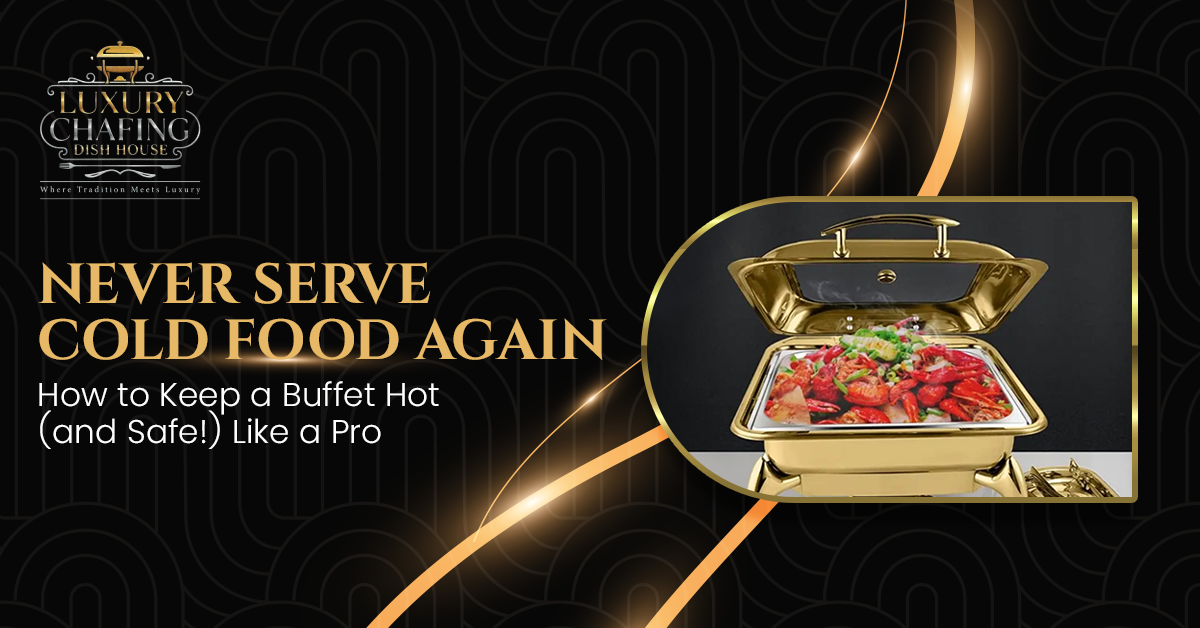
What are chafing dishes? They are the gold standard of the catering industry. A standard buffet serving set includes a metal stand, a water pan, a serving pan for the food, and a lid.
-
How do chafing dishes work? They utilize indirect heat. A Sterno fuel canister sits under the bottom pan, which is filled with a shallow layer of water. The burning Sterno fuel cans heat the water, creating an even steam heat that warms the food pan above without scorching it.
-
Best For: Large gatherings, pasta bakes, pulled pork, and heavy proteins.
-
Options: For premium events, a stainless steel chafing dish or sleek roll top chafing dishes look beautiful. If you want easy cleanup for a casual party, you can find disposable, lightweight rectangular chafing dishes or round chafing dishes online.
Elevate Your Next Event: Don't settle for flimsy, disposable party gear that ruins your food quality. Explore our signature collection of commercial-grade Luxury Chafing Dishes engineered for flawless heat distribution and stunning visual presentation.
2. The Trusty Slow Cooker & Crockpot
Your kitchen slow cooker is a portable food warmer MVP. Once your recipe is fully cooked, you simply transfer the ceramic insert to your buffet setup and set the dial to the "Warm" setting.
-
Best For: Dips, soups, chilis, mashed potatoes, and sauces.
-
Why it works: The thick ceramic walls retain heat beautifully, and the lid traps moisture to maintain optimal food quality. For large scale hosting, an electric buffet server with multiple independent slow cooker pots lets you run a multi dish station from a single outlet.
3. Electric Warming Trays
An electric food warmer tray acts like a flat, heated countertop surface. Instead of keeping food in deep inserts, you can place your own heat safe ceramic, glass, or stainless steel buffet server platters directly onto the heated glass or metal surface.
-
Best For: Appetizers, sliders, finger foods, and hors d'oeuvres.
-
Are warming trays worth it? Absolutely. If you host holidays regularly, a quality buffet warming tray takes up very little storage space and allows you to use your own decorative dishware rather than industrial catering buffet equipment.
4. Steam Tables & Roaster Ovens
If you are managing massive crowds, a heavy duty counter steam table or an electric roaster oven can save your sanity. They act like miniature, portable ovens that plug directly into the wall, freeing up your main kitchen range for baking rolls and desserts.
-
Best For: Cooking and holding whole hams, turkeys, or deep aluminum pans of baked ziti.
5. Insulated Carriers & Casserole Totes
If you have to transport meals to a venue or hold food in reserve before the buffet service begins, look into insulated food containers.
-
Best For: Transporting hot dishes or keeping backup trays hot.
-
Why they work: A high quality insulated casserole carrier or a rugged insulated food carrier utilizes thick thermal food container walls to lock in temperatures for hours without needing electricity or fuel.
No Power? How Do Caterers Keep Food Warm Anywhere?
If you are setting up an outdoor buffet setup at a park, beach, or a spot in your yard far from an outlet, you can still easily achieve excellent temperature control.
The Insulated Cooler Trick
Your everyday plastic camping cooler is engineered to keep heat out, which means it is equally fantastic at trapping heat in.
-
Line the bottom of a clean, dry cooler with heavy duty aluminum foil.
-
Take your hot baking dishes or disposable pans, cover them tightly with foil, and wrap them in clean, dry bath towels. The towels provide an extra layer of insulation.
-
Place them into the cooler and shut the lid. This creates a highly effective, improvised thermal serving dish chamber that keeps meals at hot holding temperatures for up to 3 to 4 hours.
Passive Heat with Cast Iron & Stoneware
Ditch thin metal bowls. Heavy materials like enameled cast iron and dense stoneware retain heat far longer. Warm your serving pieces in a low oven before transferring your cooked food into them, and always use a tight fitting lid to retain the steam.
How to Keep Pasta Warm for a Buffet (and Other Tricky Foods)
Different foods require different styles of moist heat or dry heat to prevent them from turning into a sad, unappealing mess on the buffet line.
1.Pasta and Rice:Preventing a Sticky Brick.
Pasta and rice absorb liquid like a sponge. To keep pasta from drying out, store the pasta and sauce separately if possible, or add an extra splash of warm water or broth every 30 minutes. Keep it covered in a slow cooker or chafing dish on low heat, and stir frequently to avoid bottom burning.
2.Meats and Sauces:Locking in Juices.
Sliced chicken, beef, or pork can dry out within minutes under heat. Always serve buffet meats nestled in a shallow layer of gravy, broth, or sauce. Keep the pan covered with a lid or tented aluminum foil to prevent evaporation.
3.Fried and Crispy Foods:Avoiding the Soggy Trap.
Never put fried chicken, wings, or egg rolls inside a covered chafing dish or slow cooker. The trapped moisture creates steam, which ruins the crispy texture. Instead, place them uncovered on a baking sheet under heat lamps or inside a conventional kitchen oven set to its lowest warming temperature (around 150°F).
Common Mistakes to Avoid on Your Buffet Line
-
Mistake 1: Trying to heat food up using a warming tray. Buffet food warmers are engineered for hot holding, not cooking. Always ensure your food is completely cooked and piping hot (above 165°F) before placing it into a slow cooker or chafing dish.
-
Mistake 2: Leaving the lids off. Leaving food exposed to room temperature air causes rapid heat loss and dries out the top layer. Instruct guests to replace the lids after serving guests, or use clear lids so people can see inside without opening them.
-
Mistake 3: Forgetting to stir. Heat sources like electric warming pads or Sterno flames apply concentrated heat to the bottom of the serving equipment. Stir your hot dishes every 20 to 30 minutes to distribute the heat evenly and prevent scorching.
The Ultimate Buffet Planning Timeline
To ensure your next event runs seamlessly, use this step by step checklist on the day of your party:
|
Time |
Action Step |
|
2 Hours Before |
Arrange your buffet table ideas and layout. Place your empty chafing dish frames, slow cookers, and trays exactly where they will live. Lay out all serving utensils next to their corresponding stations. |
|
1 Hour Before |
Set up your heat sources. Fill the water pans of your chafing dishes with hot water. Plug in your electric trays and preheat your slow cookers on "High" to warm up the stone inserts. |
|
30 Minutes Before |
Light your Sterno fuel cans under the water pans. Turn your slow cookers down to the "Warm" setting. |
|
Party Time! |
Transfer your cooked, steaming hot meals into the serving pans. Cover immediately with lids. |
|
During the Event |
Every 45 minutes, check the food with a food thermometer to verify it is maintaining a safe serving temperature above 140°F. Give sauces a quick stir and refresh with liquid if they look dry. |
Ready to Host Your Next Event?
With the right balance of food warming equipment and smart timeline management, you can step away from the kitchen and fully immerse yourself in the party hosting experience. Your guests will love the fresh, hot meals, and you will love the peace of mind that comes with a safe, professional grade setup.
